
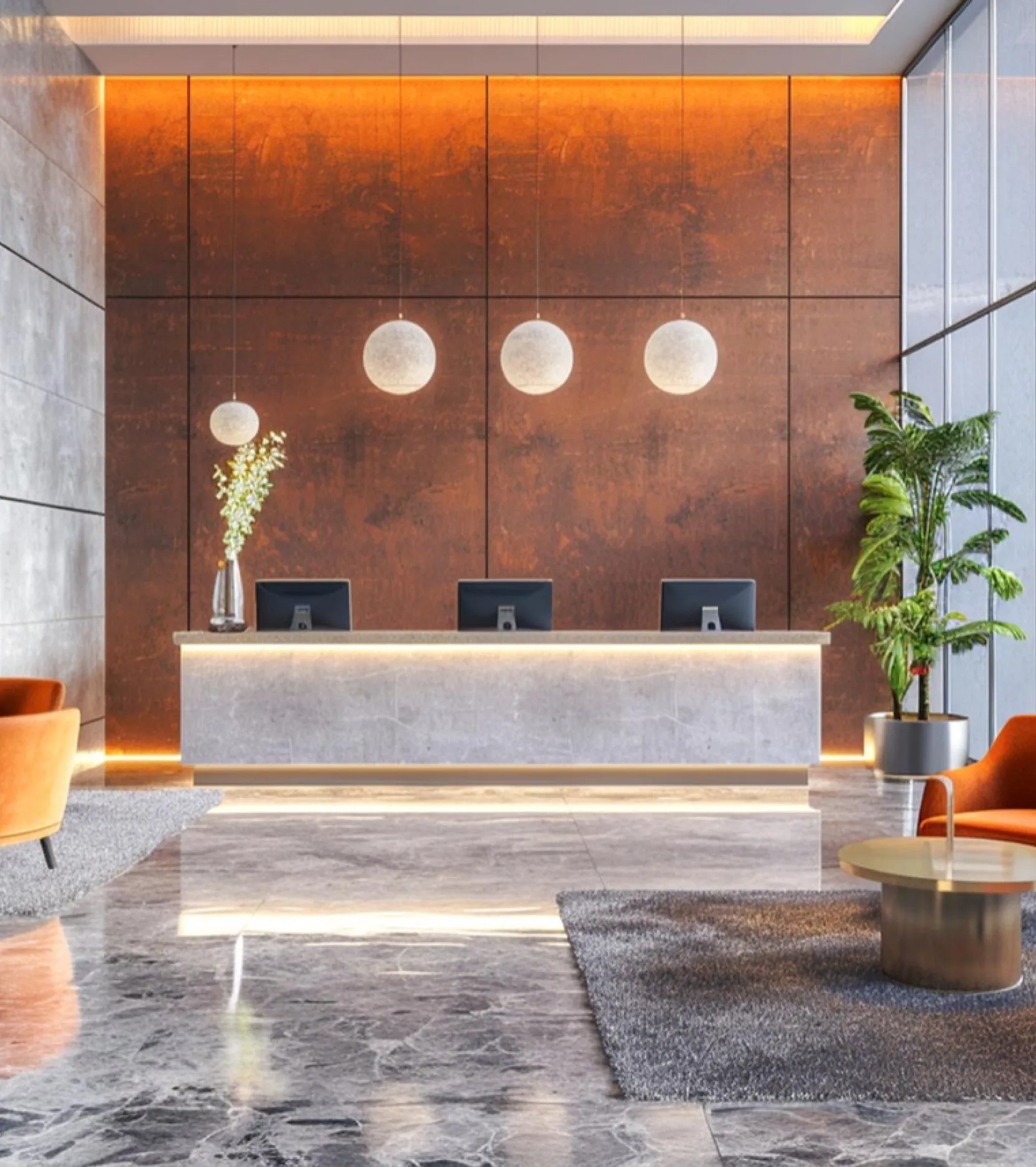
Transforming Hotel Lobbies 2025 | Design Trends That Enhance Guest Experience
Here at Arabian Hospitality, the leading interior design company Dubai, we assist you in unlocking the potential of your lobby. Our designs exceed the conventional check-in space by producing an inviting, multifunctional space that maximizes guest experience from the moment they enter.
Globally, the hospitality design market is projected to grow by 9.6% annually, with hotels increasingly focusing on designing spaces that are personalized and multifunctional. The studies by Statista show that it aimed to maximize guest satisfaction and interaction.
With the 2025 hotel lobby design trends, it is all about staying a step ahead. Join us to find out how you can do your hotel lobby redesign and enhance your guest experience.
Why Hotel Lobbies are Evolving
The classic hotel lobby has historically been viewed as merely a utilitarian area for check-in, luggage storage, and informal waiting areas. Today’s guest demands better. With post-pandemic realities, the hospitality interior design industry is evolving, and the hotel lobby is transforming into a center of interaction, connection, and engagement.
According to a survey by Statista, 74% of travelers nowadays regard hotel amenities and design as central considerations when selecting where to stay, with several valuing highly the appearance and functionality of public spaces, including the lobby.
Consequently, hotel managers are putting money into renovating these areas to increase the guest experience and provide a friendly environment that captures the hotel’s overall branding.
Top Hotel Lobby Design Trends for 2025
Let’s explore the hotel lobby design trends 2025 below:
Among the luxury hotel amenities, one of the leading hotel lobby design trends for 2025 is the multifunctional hotel lobbies. The era of staid, formal lobbies is no more. Instead, lobbies are now dynamic, flexible ones that perform multiple functions.
Guests today anticipate that lobbies offer much more than a check-in location. They anticipate having rooms where they can socialize, work, and unwind. For example, a lounge could easily transition into a co-working space with comfortable seating, plug-in stations, and fast Wi-Fi.
“Guests today are looking for more than just a place to wait. They want spaces that cater to their entire experience, from relaxation and socializing to working and connecting with others. Multifunctional lobbies provide exactly that. It’s about creating flexible, adaptable spaces that serve a variety of needs.”
– Juan O’Gorman, Managing Director of Design, HBA
Such a shift means lobbies must be multi-purpose and capable of hosting a number of various activities and events throughout the day.
Major characteristics of multifunctional lobbies are:
- Flexible furniture layouts that can accommodate a variety of group sizes easily.
- Co-working spaces are furnished with office furniture, high-speed internet, and personal meeting spaces.
- Social areas designed to promote interaction among guests, like coffee bars, communal tables, and informal seating areas, are perfect for creating a sense of community.
By investing in multifunctional spaces, hotels are able to meet the increasing demands for flexibility in how people use their time, thereby boosting the overall guest experience.
Sustainability is more than a buzzword and is a key part of contemporary hotel design, especially in busy areas such as the lobby. Customers are now more eco-conscious and therefore more willing to spend their money with those companies that prioritize sustainability.
60% of travelers are likely to select a hotel emphasizing environmental stewardship, states Green Lodging News. In order to sustain growing demand, hotel lobbies must introduce environmentally sound design features that retain energy, reduce waste, and promote environmental stewardship.
Sustainability is no longer a buzzword but a key element of contemporary hotel design, especially in areas with high traffic volumes, such as the lobby. Customers are more environmentally conscious and, therefore, more inclined to favor companies that emphasize sustainability.
60% of visitors are more inclined to select a hotel that prioritizes environmental stewardship, Green Lodging News states. To keep up with increasing demand, hotel lobbies need to implement eco-friendly design practices that conserve energy, reduce waste, and encourage environmental stewardship.
“Sustainability isn’t just a trend; it’s a responsibility. Hotels are increasingly embracing sustainable design because guests now expect it. Using eco-friendly materials and energy-efficient systems is not just good for the environment—it’s also good for the bottom line.”
– Kelly Hoppen, Award-Winning Interior Designer
Sustainable hotel design elements to implement:
- Energy-sipping lighting and heating to minimize the hotel’s carbon footprint.
- Upcycled and recycled furniture to avoid waste.
- Natural materials like wood, stone, and bamboo produce an organic, cozy feel that is also kind to the environment.
- Low-VOC paint and finishes for enhanced air quality in the lobby.
Sustainable hotel design goes beyond putting green materials into the building; it’s about designing an inviting environment that reflects the hotel’s environmentally friendly philosophy so guests will feel at ease knowing their decision is making a difference.
One of the most thrilling hotel lobby design trends for 2025 is local culture and heritage integration. Rather than the cookie-cutter, generic look, hotels are embracing local tradition, art, and material to develop authentic, immersive experiences.
Inclusion of the destination culture not only adds to the experience of the guests but also allows for a stronger sense of the destination. Whether it is an artistic piece, a fabric, an architectural detail, or a color palette, the guests will more likely retain the trip in their memory if they sense that the design is representative of the distinct character of the place.
“Incorporating local culture into hotel design helps create a sense of place for the guest. It’s about telling the story of the destination through design elements that connect people to the location, whether it’s through art, furniture, or the overall atmosphere of the space.”
– Bill Bensley, Founder of Bensley Design Studios
Examples of integration of local culture:
- Traditional local artwork and crafts, including hand-painted murals typical of the area, sculptures, and locally crafted textiles.
- Regional hues and materials that capture the essence of the destination, like warm terracotta shades in Mediterranean resorts or streamlined, contemporary looks in Dubai cities.
- Storytelling about culture in the form of exhibitions of history, music, and traditions makes visitors feel as if they belong.
By incorporating the local culture, hotels have a better chance of providing a more memorable and richer experience for their clients, thus leading to positive reviews and repeat visits.
How Multifunctional Lobbies Enhance Guest Experience
“The beauty of multifunctional spaces is that they create a sense of community within the hotel. Guests no longer just pass through the lobby—they experience it, interact with it, and feel that they belong. This engagement leads to higher satisfaction and stronger loyalty.”
– Dara Khosrowshahi, CEO of Expedia Group
As hotel lobbies are becoming multifunctional, they do more than serve as a waiting area. Multifunctional lobbies enhance guest experience through versatility, comfort, and convenience in one place.
For example, the lobby can be used as a waiting area where a person can work or relax while awaiting the availability of their room upon early check-in. In the evening, the same space can be used as a social lounge space where individuals can interact with each other, meet friends, or have an event.
This flexibility helps in the overall satisfaction of the visitors as it meets innumerable needs throughout the day.
Advantages of multifunctional lobbies:
- More interaction among visitors as they can utilize the area for work as well.
- Space usage improved, utilizing the common areas of the hotel to the fullest.
- Greater social interaction allows guests to identify with the local community.
Hotels adopting this trend will not only make their environment more interactive for their guests, but also maximize their floor space for greater functionality.
Key Design Features to Incorporate
“Designing a lobby is about creating a space that reflects the values of the hotel while offering guests comfort, utility, and an emotional connection. Incorporating flexible, adaptable design features is key to making the lobby a memorable and functional space.”
– David Rockwell, Architect & Designer, Rockwell Group
In order to apply the above trends, interior designers and hotel managers need to include the following design elements in their lobby areas:
Welcoming and adaptable seating to support groups of various sizes and offer individual relaxation alternatives.
- Modular furniture that may be adapted with ease in order to form specific zones for working, socializing, or relaxing.
- Natural aspects, like plants, wood, and water features, reflect a peaceful and eco-friendly ambiance.
- Interactive digital kiosks or touchscreens enable guests to check in, browse facilities, or receive local tips.
FAQs
Q: What are the most popular hotel lobby design trends in 2025?
Hotel lobbies by 2025 will have transformed into multifunctional areas that integrate work, relaxation, and social spaces seamlessly. Design will be influenced by sustainability, with green materials and energy-saving concepts becoming the core of the experience.
Q: How can multifunctional lobbies enhance guest experience?
Multifunctional lobbies provide versatile rooms in which guests can work, relax, and socialize all within one environment. This versatility enhances guest comfort by providing an adaptive room that adapts to varying needs throughout the day.
Wrap Up
The hotel lobby is not a straightforward check-in zone anymore; it is an experience. With the implementation of hotel lobby design trends 2025, hotels are able to design areas that not only serve their purpose but also attract, are environmentally conscious, and culturally stimulating. Multifunctional lobbies, green initiatives, and infusing local culture will be key to defining the future of hotel design and influencing the overall guest experience.
Embrace these trends today and make your lobby a memorable stop that provides the context for your visitors’ stay.
Thinking of renovating your hotel lobby? Find our office interior design solutions or visit our workspace interior design solutions to add your space with the latest trends.