
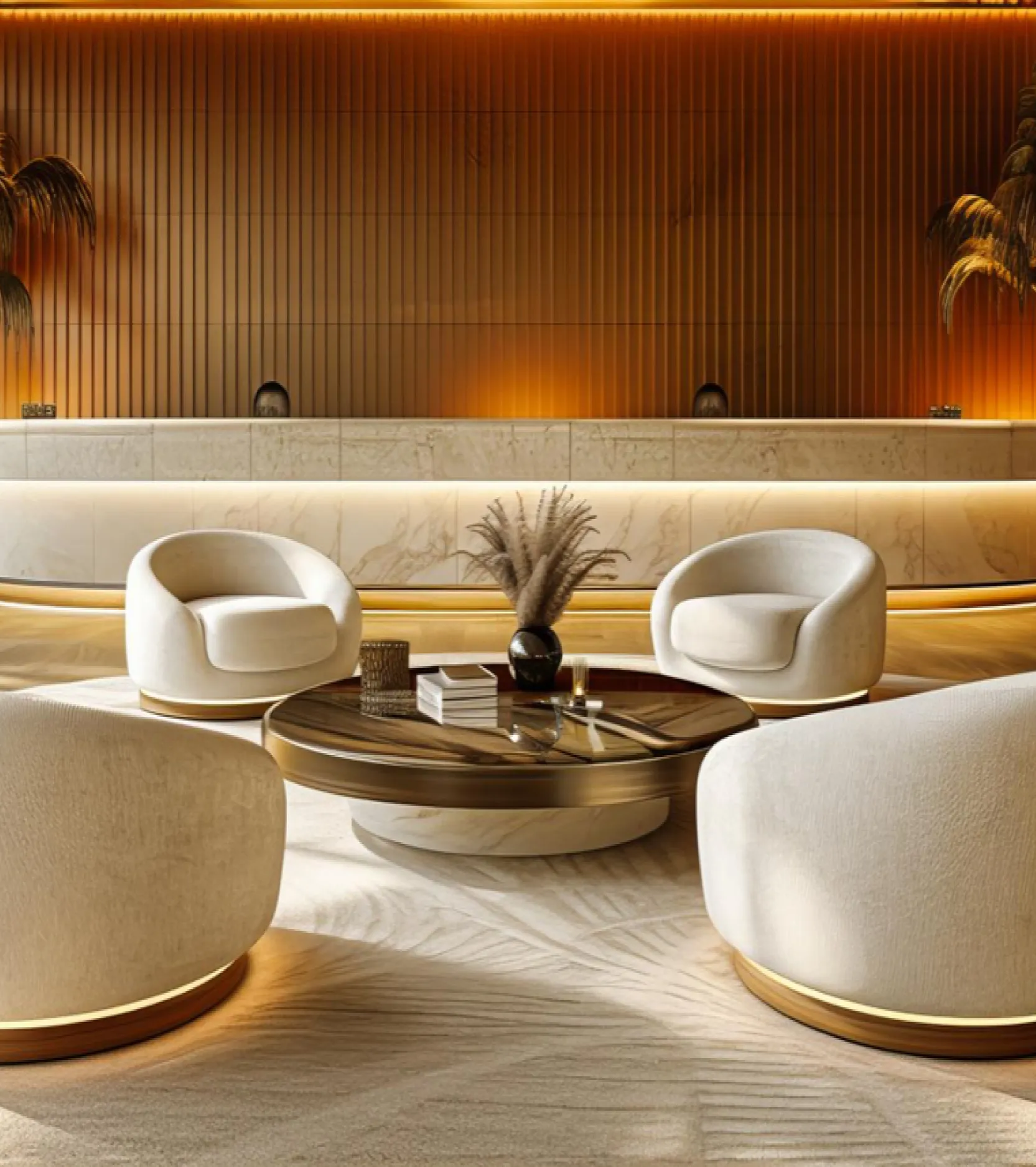
Sustainable Hospitality Design in 2025 | Eco-Friendly Hotel Trends
Neque non eget bibendum aenean nam dis posuere odio. Vehicula suspendisse laoreet suspendisse fermentum quis sit amet felis. Duis sit ametfaucibus porta.Sociosqu fringilla pharetra rutrum aptent varius himenaeos.at tristique dictum, mollis vitae lacus.
Helsiana John – MD
Forward-thinking design is no longer about how it looks; it’s about doing the right thing. That’s why visionaries such as Arabian Hospitality are reshaping how we perceive space in subtle ways, merging smart design with sustainability. You won’t find it in neon lights, but their hospitality design for sustainable environments quietly makes a statement.
Eco-friendly infrastructure in hotels, as indicated by the World Travel & Tourism Council (WTTC), will cut operational expenses by 30% and gain 20% more repeat customers by the year 2025. This is consistent with Booking.com’s finding that 83% of tourists would like to stay in environmentally friendly hotels.
Wondering how you can add low-impact lighting, AI-controlled HVAC, and waste-free facilities to your building without slaying your margins? Hang in there. We have real-world solutions, expert tips, and a few surprising concepts Mother Nature would approve of.
Why Sustainability is No Longer Optional
Sustainability has moved from a “nice-to-have” to a non-negotiable core in contemporary hotel operations. It’s no longer simply a matter of lessening environmental damage; it’s a matter of competitiveness, compliance, and credibility. In 2025, late hotels risk more than criticism; they risk becoming irrelevant.
The hospitality industry contributes about 8% of global greenhouse gas emissions, and hotels are one of the contributing factors in consuming energy, using water, and waste. Governments globally are setting tougher building codes, and green design has become a baseline for most cities.
Booking.com’s 2024 Sustainability Report revealed that 83% of global travelers find sustainable travel options to be important, and 69% search actively for eco-certified properties. Millennials and Gen Z visitors, in particular, are at the forefront, making their reservation decisions align with their environmental beliefs.
According to the U.S. Green Building Council, LEED-certified hotels can save:
- Up to 30% on energy
- Around 25% on water
- Up to 20% on maintenance and operations costs
Sustainability not only lowers operating expenses but also strengthens brand loyalty, guest satisfaction, and property value creation.
Energy-Efficient Hotel Design
Where energy prices continue to escalate, and brand value is characterized by sustainability, minimizing energy use is no longer an option; it’s a necessity. Innovative hotels are now using technology and design creativity to lower their carbon footprint and increase guest comfort.
This section looks at how innovative energy solutions are reinventing hospitality facilities into leaner, greener operations.
Heating, ventilating, and air conditioning (HVAC) systems consume as much as 50% of a hotel’s energy. Smart HVAC systems in 2025 will employ occupancy sensors, zone controls, and automatic thermostats to maximize comfort and reduce waste.
LED lighting is becoming commonplace, consuming 75% less energy and lasting 25 times longer than incandescent bulbs. Daylight sensors, dimming controls, and motion sensing add to the efficiency.
Solar panels, wind turbines, and geothermal systems are gaining traction in hospitality. Leading hotels are investing in:
- Photovoltaic rooftops to generate clean energy
- Solar thermal systems for water heating
- Wind energy in coastal or remote properties
Hotels such as the Crowne Plaza Copenhagen Towers operate on 100% renewable energy, which is the gold standard for net-zero operations.
AI-Driven Energy Management Systems
Artificial intelligence today drives advanced energy management systems to forecast consumption using weather, occupancy, and activity of guests.
Advantages:
- Load balancing and power off-peak usage
- Computer-based energy performance benchmarking
- Fault detection and maintenance notification
The Sinclair Hotel in Texas, one of the world’s earliest AI-integrated hotels, uses such systems to track each kilowatt in real time.
Water Conservation Strategies
Energy may get the headlines when sustainability is mentioned, but water is stealthily becoming the most valuable and most stressed resource for hospitality. Droughts, increasing water prices, and climate uncertainty are forcing hotels to think more creatively about how to save water.
It’s no longer merely a matter of cutting flow rates; it’s a matter of creating smart, regenerative systems that squeeze every last drop.
Hotels use anywhere from 400 to 750 liters per guest per day. To stop this, builders are fitting:
- Low-flow showerheads and faucets (cut usage by 30–50%)
- Dual-flush toilets
- Touchless public washroom faucets
The above systems not only save water but also decrease utility bills and maintenance costs.
Greywater systems harvest wastewater from showers and sinks and reuse it for:
- Landscaping
- Flushing toilets
- Cooling towers
Rainwater harvesting systems are combined with intelligent irrigation to reduce freshwater consumption. The ITC Grand Chola Hotel in Chennai, India, reuses 100% of its wastewater, lowering municipal water dependence by 35%.
Behavioral initiatives continue to play an important role. Hotels promote:
- Towel/linen reuse with discreet signage
- Water-conserving advice on in-room TVs and apps
- Loyalty rewards for low-impact options
App dashboards even display guests’ water use while they stay.
Less Waste in Hotel Operations
In an age where landfills are dwindling and traveler scrutiny is increasing, waste reduction has become a back-of-house issue racing to become a front-page priority. Hotels are now being asked to re-evaluate not only what they throw out but also how and why.
The answer? Adopting smarter systems that view waste as an asset, not an albatross.
Rather than ‘take-make-waste’, contemporary hotels are adopting closed-loop systems by:
- Prohibiting single-use plastics
- Employing compostable packaging
- Donating spare amenities to shelters
Properties also have modular, repairable furniture as an option to lengthen lifespans and minimize landfill contributions.
Artificial intelligence platforms like Winnow help hotels monitor and reduce food waste by tracking plate returns and kitchen scraps. This resulted in decreased overproduction and a more sustainable menu mix.
Hotels also possess:
- Smaller portion sizes
- Custom-made buffets
- Organic waste composting sites
The World Resources Institute estimates that minimizing food waste would reduce up to 70 million tons of CO2 each year.
Recycling Amenities and Guest Products
Initiatives such as Clean the World gather and sterilize soap bars and toiletries to supply needy communities. This redirects millions of items from landfills and contributes to global hygiene initiatives.
DoubleTree hotels across Europe have alone recycled more than 500,000 bars of soap, conserving thousands of liters of water in the process.
Eco-Friendly Materials & Furniture
From lobby walls to bed frames, hotel building furnishings, and materials all declare a brand’s dedication to the world. In 2025, customers are resting not only on comfort but also on sustainability.
The shift to greener interiors is not only skin deep; it’s an open proclamation of health, longevity, and low-impact living.
Green hotels in 2025 employ low-impact materials such as:
- FSC-certified wood from certified forests
- Bamboo and other renewable materials
- Fly ash concrete and recycled steel
They minimize embodied carbon and can be certified LEED or WELL.
FF&E is now designed with sustainability in mind:
- Recycled textiles and PET upholstery
- Water-based, non-toxic adhesives
- Durable, modular pieces that support circular design
Buying from suppliers with ISO 14001 or Cradle to Cradle certifications guarantees complete transparency and accountability.
Sustainable design is also healthy in that it eliminates volatile organic compounds (VOCs) that produce respiratory irritation.
Common improvements include:
- Zero-VOC paints and sealants
- Curtains and rugs made of natural fibers
- More ventilation and HEPA filtering
Amenities like these attract wellness travelers and enhance indoor air quality scores.
Smart Technology & Green Operations
Technology is no longer merely a back-of-house amenity; it’s the behind-the-scenes engine powering sustainable transformation throughout hotel operations. From predictive maintenance to AI-controlled guest comfort, green tech is now a fundamental part of the new hospitality playbook.
Such systems, apart from conserving resources, yield real-time intelligence, reduce costs, and deliver end-to-end guest experience.
IoT networks connect lighting, HVAC, and appliances to a shared platform that enables:
- Predictive maintenance
- Real-time consumption monitoring
- Adaptive room conditions
Occupancy sensors, thermostats, and even elevators are also part of smart systems to remove idle time and energy wastage.
Hotels are now being asked by stakeholders to report on their environmental performance.
The newest property management systems now have:
- Carbon accounting tools
- Energy and water usage dashboards
- Automated compliance reports for LEED, BREEAM, and GRI standards
Dashboards promote transparency, enable improved decision-making, and prepare for audits.
Sustainable hotels now audit suppliers on:
- Emissions transparency
- Worker rights and fair wages
- Recyclability of packaging
Green procurement practices range from bed sheets to building materials, bringing every buy in line with ESG objectives.
Real-World Examples of Sustainable Hotel Design
Hotel Name | Key Sustainability Features | Measured Impact |
Proximity Hotel, USA | LEED Platinum, solar hot water, reclaimed materials | 39% energy saved, 33% water saved |
ITC Grand Chola, India | 100% wastewater recycling, solar & wind power | 35% less freshwater use, energy independence |
Populus Hotel, USA | Carbon-positive, green roof, upcycled materials | Net-positive impact, 400% carbon offset |
Oasia Downtown, Singapore | Vertical gardens, passive cooling, and local materials | Reduced energy costs, biodiversity enhancement |
Soneva Fushi, Maldives | Onsite Eco Centro, composting, glass-blowing from waste | 90% waste recycled, zero landfill waste |
FAQs
How can energy usage in hotels be cut down?
Hotels can save 25–40% of energy usage by using innovative HVAC systems, LEDs, AI-based energy management, and incorporating renewable energy sources.
What are the finest sustainable materials for hotel buildings?
Sustainable materials are bamboo, reclaimed wood, recycled metals, FSC-certified wood, low-VOC finishes, and fly ash concrete.
Key Takeaways for 2025 and Beyond
- Sustainability is no longer a bonus; it’s a baseline.
- Energy and water efficiency directly improve profitability.
- Guest engagement tools increase participation in green programs.
- Waste reduction and ethical sourcing strengthen brand reputation.
- ESG reporting and intelligent dashboards ensure accountability.
Conclusion
2025 is the year when sustainability is what greatness in the hospitality sector means. From the behind-the-scenes energy infrastructure to the face-of-house guest experiences, each design and operation choice matters.
By adopting sustainable hospitality design, not only do companies align with world climate targets, but they also fuel long-term profitability, differentiation, and trust.